Art Museum Riga Bourse: Highlights and Visitor Guide
At Art Museum Riga Bourse, you can explore European paintings, Asian art and ancient objects inside Riga’s former stock exchange on Dome Square. It is a rewarding choice if you want world art and historic architecture within your Old Town itinerary.
You encounter a foreign art collection that forms part of the Latvian National Museum of Art. The venue’s official name is Art Museum RIGA BOURSE, and its international focus gives you a distinct stop when exploring museums in Riga or elsewhere in the Baltic States.
With RigaInfo.com, you have an English-language resource for connecting Riga’s cultural attractions with practical local information. Here, your main choice is how much of the museum to include: the painting gallery and porcelain, the Asian collections, or a wider route through the permanent displays and a changing exhibition.
What Can You See Inside?
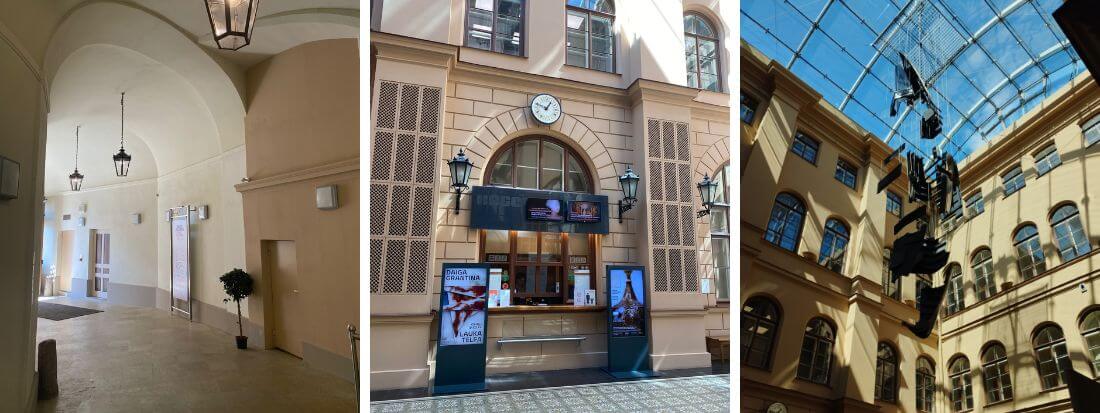
You can see European fine and decorative art alongside Asian collections, ancient Egyptian art and objects from Greece and Rome. Your route also includes Nicholas Roerich’s paintings, while changing exhibitions bring other parts of the collection and international art into view.
European Masters in the Painting Gallery
Your painting-gallery visit takes you into the richly decorated fourth-floor rooms of the former stock exchange. You encounter Western European painting across several centuries, including Dutch, Flemish, German, French and Italian schools.
Give the interiors some attention alongside the pictures. The gilding and decorative surfaces help you see how a historic collecting environment shaped the display. In the Brederlo Rooms, you also encounter a selection from Friedrich Wilhelm Brederlo’s collection, adding a Riga collector’s perspective to the European works.
European Porcelain and the Silverware Chamber
If decorative arts interest you, the European porcelain offers a different pace from the paintings. You can examine how painted decoration and sculpted forms turn useful objects into display pieces, with the collection spanning the 18th to 20th centuries.
Your route continues into the Silverware Chamber on the fourth floor. Set inside a former safe room, it contains precious-metal objects dating from the late 17th century to the early 20th century. The setting gives you a direct connection between the building’s former valuables and the museum objects it protects today.
Asian Collections and Ancient Egyptian Art
On the third floor, you encounter traditional art from Japan, China, India and Indonesia. The Asian Art Gallery brings religious objects and decorative arts into the same visit, giving you several cultural traditions to explore.
For ancient Egyptian art, your route leads into another former stock-exchange safe. Its original neo-Gothic doors remain part of the experience, alongside the Egyptian display and wooden sarcophagus. Allow yourself time to notice the chamber’s architecture as well as its contents.
Ancient Greek and Roman Art
You find the Ancient Greek and Roman Art Chamber on the third floor. Its displays bring together Greek pottery, Greek and Roman coins, and marble sculpture from the Latvian National Museum of Art collection.
This is a useful stop if you enjoy looking closely at smaller objects. With pottery and coins, you shift from the scale of gallery paintings to details of shape, imagery and surface. You can include the chamber naturally in the same route as the Asian galleries.
Roerich Paintings
Your third-floor route also includes the Roerich Painting Gallery, dedicated to Nicholas Roerich. His Himalayan mountain scenes offer a focused encounter with landscape and colour.
Look at the clean areas of colour in his tempera paintings, a medium that uses pigment mixed with a binding material. After the variety of objects elsewhere, you have space here to follow one artist’s treatment of mountain forms and distance.
How Do You Plan Your Visit?
You can reach the museum on foot while exploring Vecrīga, with tickets available at the museum or through Mobilly. Your planning should account for the multi-floor layout, the displays you want to see and any guided activity included in your visit.
Where Is the Museum and How Do You Get There?
You will find the museum at Doma laukums 6, on Dome Square in Vecrīga, Riga’s Old Town. Riga Cathedral stands nearby, making the museum easy to fit into a walking route through the historic centre.
You have street-level entrances from Dome Square and Mazās Pils Street, with cobblestones on the approach. If you arrive by car, passenger drop-off is available on Jēkaba Street. For cycling, bicycle stands are available by the Mazās Pils Street entrance during museum opening hours.
What Are the Opening Hours and Ticket Prices?
Your regular visiting window is Tuesday to Sunday, with a later closing time on Friday. The published weekly schedule is:
| Day | Opening hours |
|---|---|
| Monday | Closed |
| Tuesday–Thursday | 10:00–18:00 |
| Friday | 10:00–20:00 |
| Saturday–Sunday | 10:00–18:00 |
You can purchase admission at the ticket office or in the Mobilly app. In Mobilly, your route is through “Other” and then “Museums and exhibitions”; your purchase produces a QR-code ticket to present at the museum entrance.
If you include a guided tour, your cost consists of museum admission plus a separate guide-service fee. The guided-tour options below give you the published group fee and duration.
Audio Guides, Guided Tours, and Booking Options
You have both self-led and guided ways to explore the museum. Audio guides include English-language content about artworks, individual galleries and the building, giving you context while leaving you in control of your pace.
For a staff-led visit, you can choose a theme based on the permanent collection or the current Great Exhibition Hall exhibition. Your guided tour lasts 40–90 minutes, with a guide-service fee of €30–€50 per group in addition to museum admission.
The published group size is 5–15 participants. Advance registration is required, and an English-language activity needs prior agreement with museum staff. Your arrival time should include the recommended 15–20 minutes for the ticket office and cloakroom before the activity begins.
Accessibility, Family Facilities, and Time to Allow
You have lift and ramp access to every museum floor. The lift has a door opening of 98 cm, and the ramp has a 3.8% slope, although your approach outside crosses Old Town cobblestones.
Inside, you have benches, accessible toilets near the cloakroom and wheelchairs available for use during the visit. Assistance dogs are permitted. Some galleries close during exhibition changes, so your route through the building can vary.
With young children, you have baby-changing facilities near the cloakroom and permission to use a pushchair inside. Pushchairs are also available for museum use, and a fourth-floor rest area overlooks Dome Square.
For timing, use the 40–90-minute guided-tour format as a reference for a focused visit. A self-led route through all your chosen galleries, plus a temporary exhibition, needs additional room in your itinerary. You are likely to find quieter conditions on weekdays after 15:00 or at weekends before 11:00.
From Stock Exchange to Art Museum
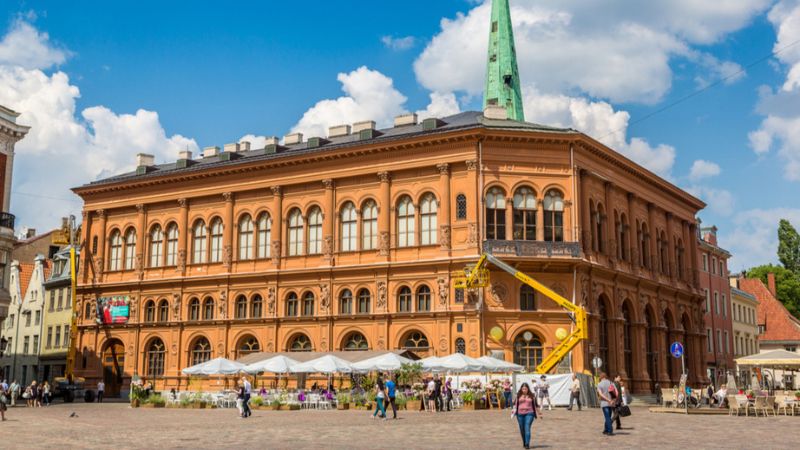
You explore the collection inside the former Riga Stock Exchange, where architecture once expressed the city’s trading wealth. The restored Riga Bourse building now gives you access to ceremonial rooms and former secure spaces adapted for art.
Harald Julius von Bosse and the Venetian Renaissance Design
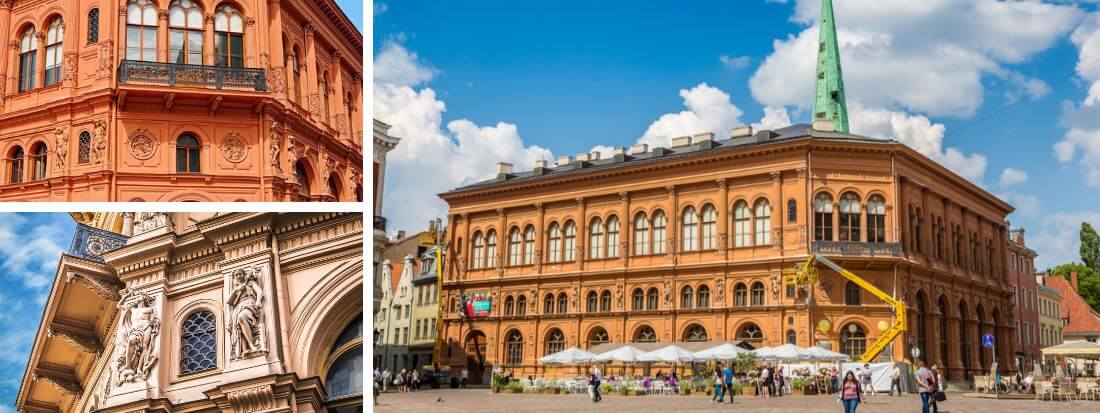
You can recognise the building’s Venetian Renaissance palazzo design in its decorative façade and formal interiors. The Riga Stock Exchange was built between 1852 and 1855 to a design by Harald Julius von Bosse, a St. Petersburg architect of German origin.
A palazzo is an urban palace, and you see that influence in the building’s presentation of wealth and abundance. Inside, the main staircase and upper rooms use gilding and artificial marble to create a ceremonial setting. Your visit gives you access to these rooms as part of the museum route.
Riga’s Trading Heritage, Restoration, and Cultural Exchange
As you move between galleries and former safes, you encounter traces of the building’s commercial purpose. Riga’s council members, mayors and traders also helped form the foreign art collections during the 19th century.
The major restoration took place from 2008 to 2011. You now move through a building adapted for museum displays and international exhibitions, with access improvements integrated into the protected historic structure.
That history gives your visit a useful thread: trade connected Riga with other places, and the museum continues those connections through cultural exchange. You encounter works from different regions within rooms that once supported the city’s international commerce.
What Can You Explore Nearby?
You can combine the museum with Dome Square and Riga Cathedral without adding a separate journey across the city. For English-language local discovery, RigaInfo.com helps you place cultural stops within your wider Vecrīga itinerary.
Combine the Museum with Riga Cathedral and Dome Square
Your most direct pairing is Riga Cathedral and its famous organ, beside the museum on Dome Square. You can connect the museum’s international art with the cathedral’s religious and musical heritage while keeping your walking route compact.
Treat the cathedral interior and any concert as separate parts of your schedule, each with its own access arrangements. Dome Square gives you a break between indoor visits and space to examine the Riga Bourse façade from outside.
For a manageable route, you can group the museum and cathedral together, then continue through the surrounding Old Town streets. This leaves flexibility for the amount of time you spend with the collection.
Make Room for World Art in Your Riga Itinerary
You have a strong reason to include Art Museum RIGA BOURSE if your interests combine international art with historic interiors. The painting rooms, Asian collections and former safe chambers give you several ways to shape a visit around what you enjoy.
For a focused itinerary, you can choose your main galleries and leave room for the current exhibition. Pairing the museum with Dome Square and Riga Cathedral keeps your cultural stops close together, while Friday’s later closing gives you an evening option.